Towards the Sassi Castelli Refuge: a path through history, nature and high-altitude silence
There are paths that wind like stories, through woods and silences, and the one that leads from Reggetto to the Sassi Castelli Refuge is one of them. It is not just a hike, but a slow approach to a landscape that changes step by step, bringing with it ancient stories, memories of borders, and that discreet harmony that only the mountains can offer.
The starting point: Reggetto, the secret heart of Val Taleggio
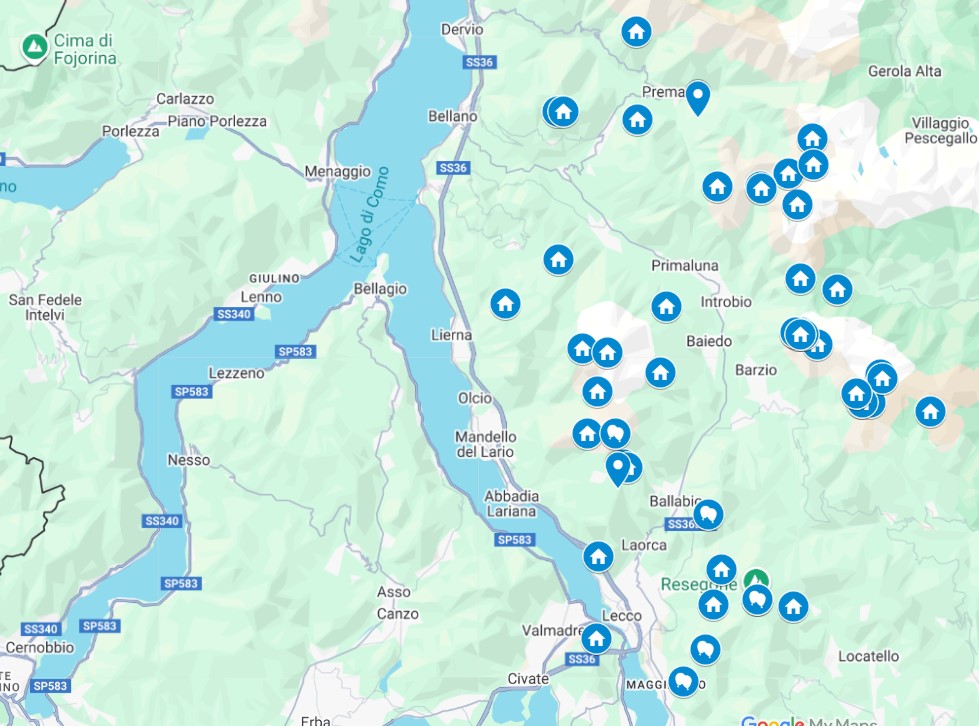
It starts from Reggetto, a tiny hamlet of Vedeseta, which can be reached by taking the Val Brembana state road 470 to San Giovanni Bianco, and then taking the Val Taleggio provincial road 25. The entrance to the valley is spectacular: a gorge carved into the rock, narrow and evocative, almost an antechamber to the past. You pass Sottochiesa and the village of Taleggio, reach Vedeseta and climb, calmly, up to the silent village of Reggetto.
Alternatively, those arriving from Valsassina can climb to the Culmine di San Pietro, cross the ridge and descend into Val Taleggio, until they reach Vedeseta and from there climb to Reggetto. Both roads lead to the same starting point, but the feeling is different: one is gorge, the other ridge.
The beginning of the journey: between centuries-old pools and memories of the Serenissima
Having parked your car next to the wash house - a corner of coolness and memory - you start to climb along a narrow tarmac road, with houses on the left and meadows on the right. An old 18th-century tub marks the first fork in the road. We leave the asphalt for a dirt track that enters the green, among trees that seem to want to protect the path.
The route gradually becomes more and more intimate. Passing a few old huts and ruins, we reach Vaccareggia, where a pool and a large cippus - the “Terminù” - tell a piece of forgotten history: here ran the border between the Republic of Venice and the Duchy of Milan. It is strange to think that today we freely trample over what was once an impassable boundary.
In the heart of the forest: water, stones and silent ascents
We descend towards the Zucco stream, which we cross on a concrete bridge. The forest thickens, the path patiently gains height, between hairpin bends and ruins that emerge like ghosts of a rural past. Some bear carved dates, such as 1868, reminding us how much this land has been lived, worked and loved.
The forest alternates between birch and beech, and offers delicate blossoms: little bells sway lightly, as if to whisper that here, beauty needs no fuss. The red marks guide unhurriedly, between stretches dug into the earth and uncertain passages, where the path seems to hesitate, but does not get lost.
Towards the Piani di Artavaggio: the landscape opens up
As you ascend, the view widens. One encounters pastures, old farmsteads, hunting grounds. You walk along a grassy ridge, between low walls and stones. Every now and then you cross the dirt road - recent, wide - but the real path follows the tracks that meander through the grass, invisible were it not for those red marks that always lead you back to the right path.
A memorial stone commemorates a tragic event in 1924, when lightning struck a child. This too is part of the mountain: its beauty is true precisely because it has never been tamed.
The last few metres: the goal reveals itself between ruins and sky
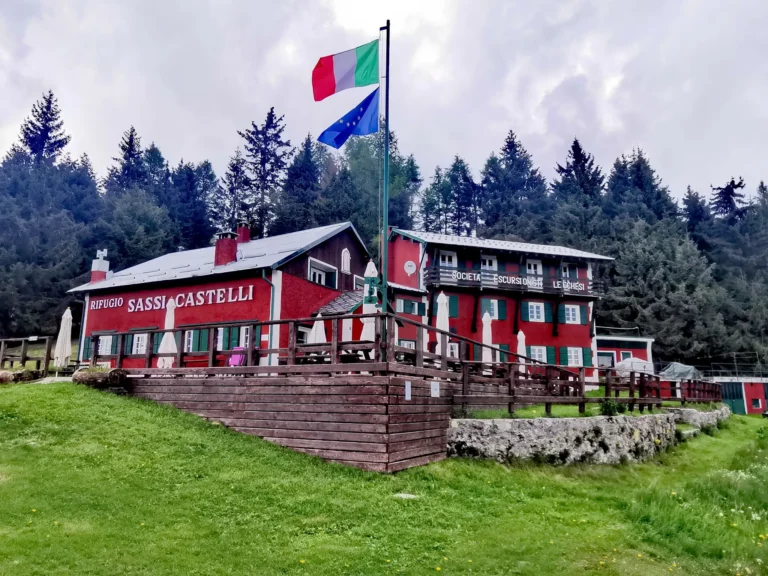
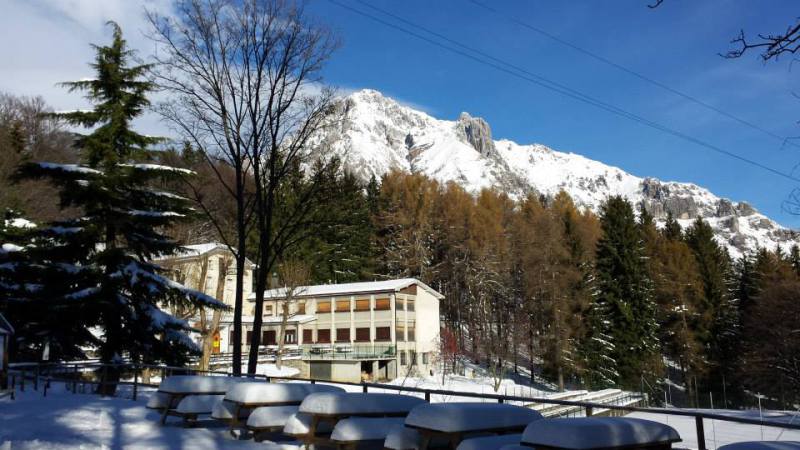
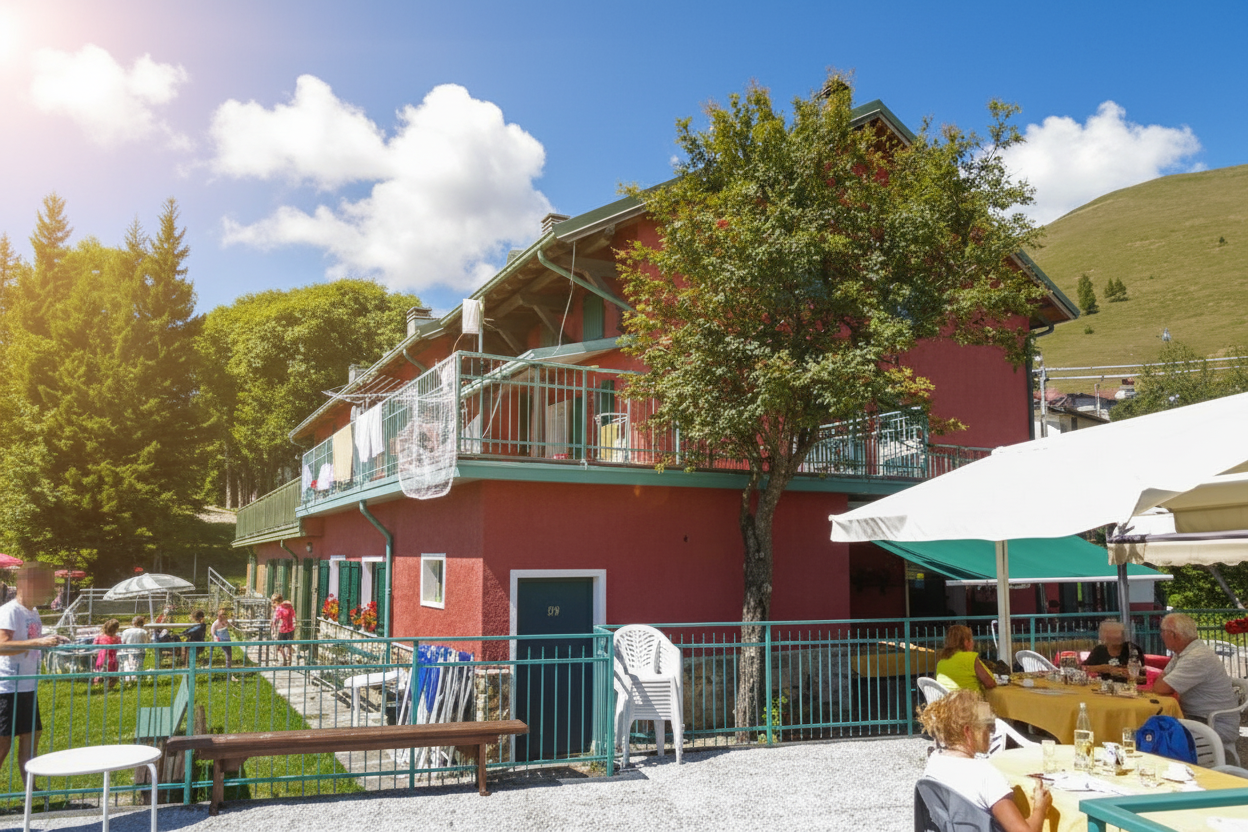
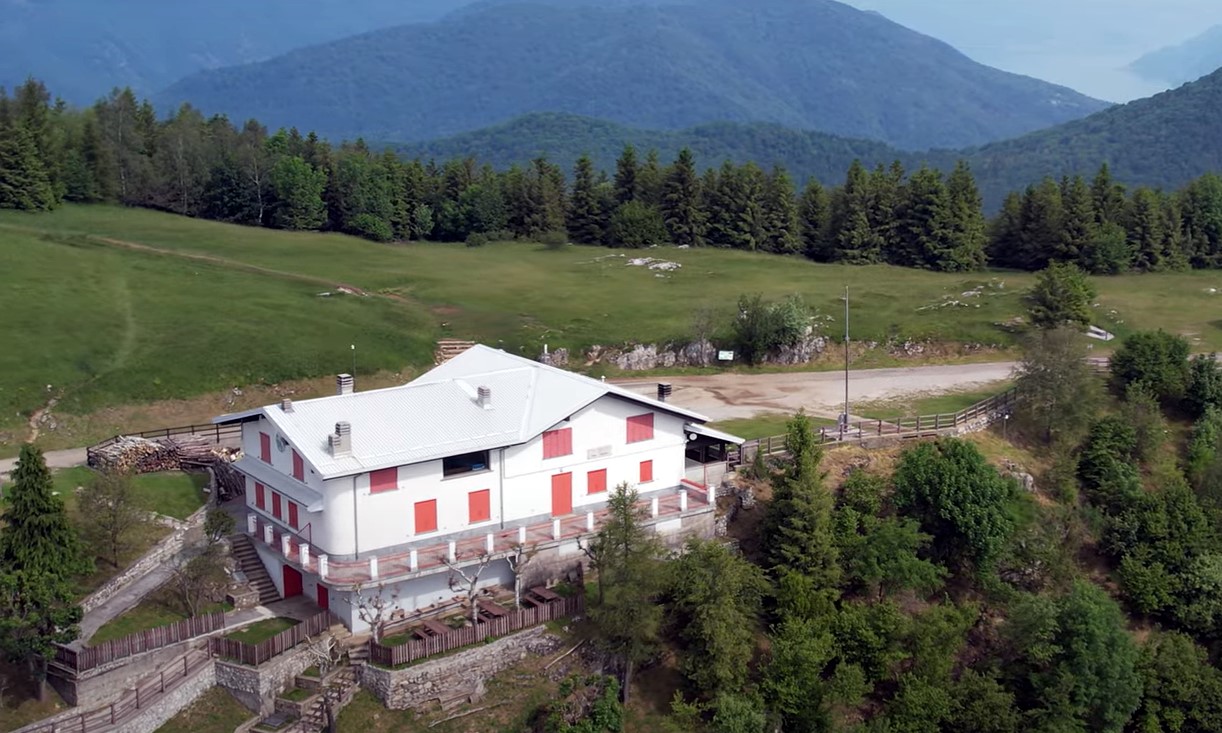
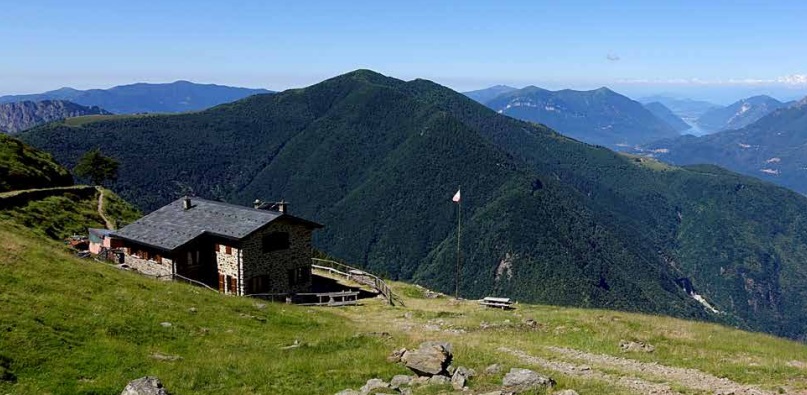
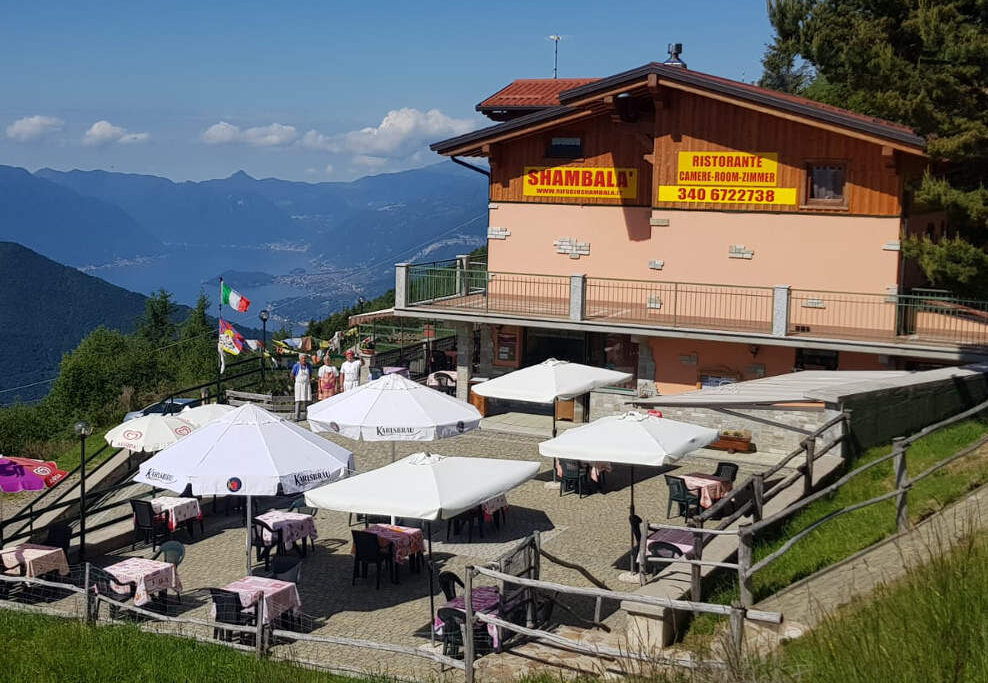
The vignettes take us past ruins, old tubs, abandoned pensanas. We catch a glimpse of the Albergo degli Sciatori, now close by. Last bends, a sparse grove, and finally, an open bar marks the official entrance to the Piani di Artavaggio. In front of us, as if in a scene already written, the huts open up: the Sassi Castelli, the Baita della Luna, the Casari. The pink of the Sassi Castelli stands out between the green and the sky, like an exclamation mark of peace.
Time and technical data
The route takes about two and a half hours, with a total elevation gain of about 720 metres. It is an itinerary suitable for those who enjoy slow walking, the variety of the landscape and that silent dialogue with the mountain that becomes more and more intense the higher you go.