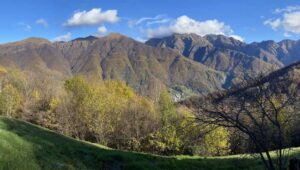
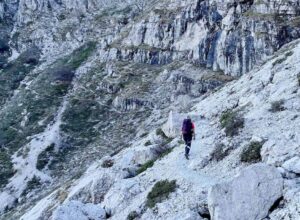
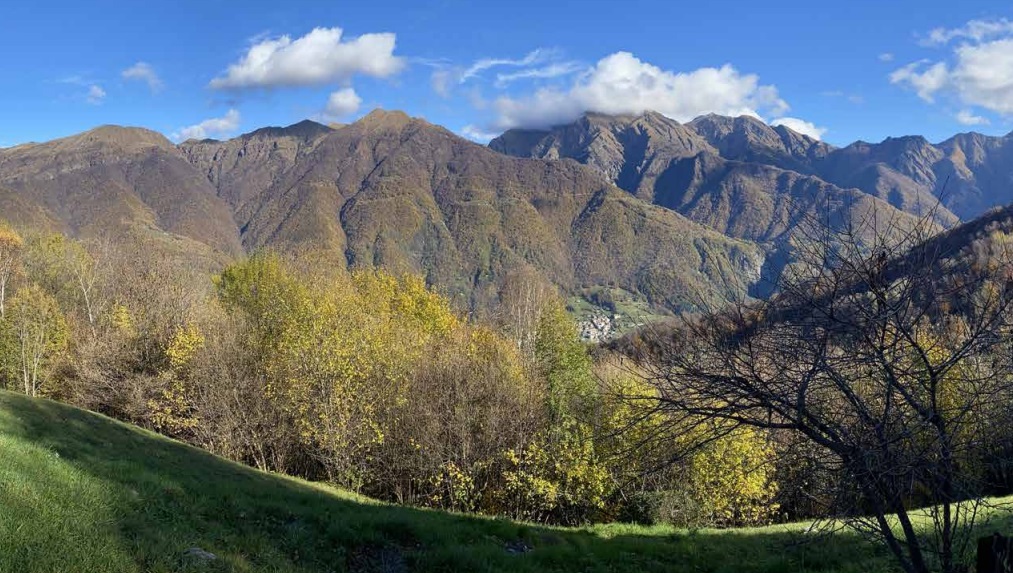
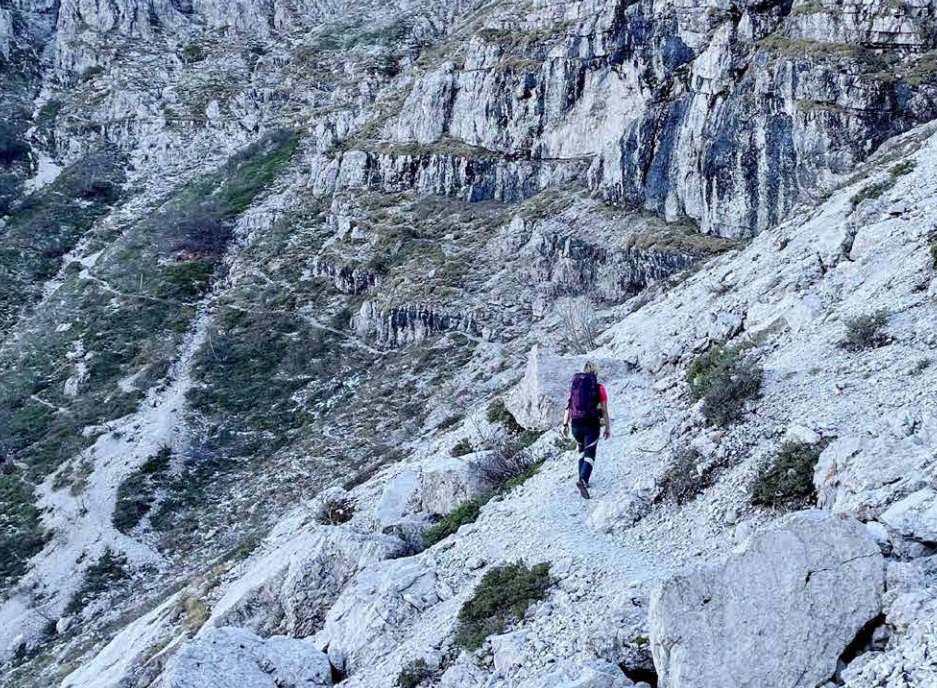
Stone, wooden gates, meadows and not a soul. This is how the village of Mandonico appears to the eyes of hikers who, crossing the Sentiero del Viandante, find it before them. A compact agglomeration of rustic buildings, almost as if it were on the defensive, ready to parry the blows of some outsider who had come from afar in an attempt to take possession of it. And indeed, what is now considered the old nucleus of Dorio was chosen by the ancient peoples precisely to protect themselves from war attacks, looting and raids, being in a position perched between the Valle di Dorio and the Valle dei Mulini. History says that the first settlements of the Ligurians and, soon after, the Celts arose here, as evidenced by a number of axes dating back to the Bronze Age, which have been found and are now preserved in Como, as well as numerous erratic boulders with chapels, evidence of religious rites. Not isolated expressions of devotion: also standing out, a little apart from the rest of the village, is the small church of San Giorgio, dating back to the 15th century and for a long time the parish church, from 1506 to 1787, in front of which there is a balcony overlooking the lake, complete with a bench to enjoy a little and take a rest. The most precious jewel of the religious building is the late Gothic fresco dating back to 1422 depicting the exploits of the saint to whom it is dedicated, occupying almost the entire north wall of the nave, divided into six panels distributed over two bands: in one of the larger ones, St. George riding a white horse while piercing the dragon stands out. There is also a depiction of the Virgin Enthroned with Child and the Archangel Michael, as well as St. Anthony Abbot, a bishop identified as St. Gotthard and the Madonna Enthroned with Child on her lap.
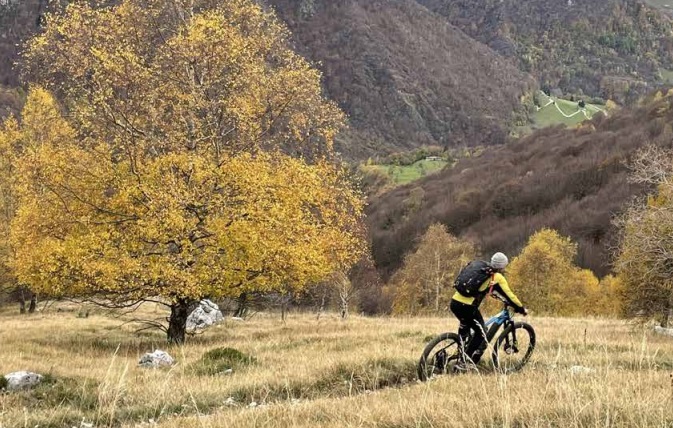
Continuing to skirt the thick stone buildings, adorned with external stairways that once served to reach the upper floors, makes the mind gallop beyond the walls of decisive volumes, helping it to imagine life inside as it must have once been: on the ground floor rooms with hearths, on the higher levels spaces for sleeping or for drying and storing cereals and chestnuts. A slow daily routine, punctuated by the rhythms of nature, an element that dominates in this setting of slopes and paths, from which one can glimpse the changing hues of the lake, depending on the climate. It should not have been so different from the landscape admired by those who once inhabited the area, capable of providing indelible views by perfectly interweaving human traces and those of Creation. Looking at it now, it becomes difficult to think of it as teeming with life, a life that has been missing for over a century, when the last family left Mandonico. The passage of time has put the little hamlet on hold, gradually shifting interests and daily life to the current settlement, close to the lake. A past, however, that does not seem to have been put to a definitive end, thanks to its strategic location, this time for reasons related to outdoor tourism, and the recent renovations that are affecting some of the village's houses, all second homes. Here and there, in fact, anthropic signs emerge, indicators of how Mandonico has no intention of dying out definitively, let alone remaining a snapshot of times gone by.
This site uses cookies to manage navigation, content customisation, traffic analysis. By closing the banner you consent to the use of technical cookies only. This choice can be changed at any time.
When you visit a website, information may be stored or retrieved and saved in the cache of your browser, mainly in the form of cookies. Check your cookie services here.
These tracking tools are strictly necessary to ensure the operation and provision of the service you have requested from us and, therefore, do not require your consent.
These cookies are set by Google's recaptcha service to identify bots to protect the website from malicious spam attacks and to test whether the browser is able to receive cookies.
wordpress_test_cookie
wp_lang
These tracking tools enable simple interactions and functionalities that allow you to access certain resources of our service and make it easier for you to communicate with us.
Cookies necessary for the proper functioning of the website and performance. Some cookies are associated with Google Universal Analytics, which is a significant upgrade of Google's most commonly used analysis service.
These tracking tools allow us to provide you with commercial content personalised according to your behaviour and to manage, deliver and track advertisements.