Towards the Rifugio Sassi Castelli: along the high path (SUMMER) from Culmine di San Pietro
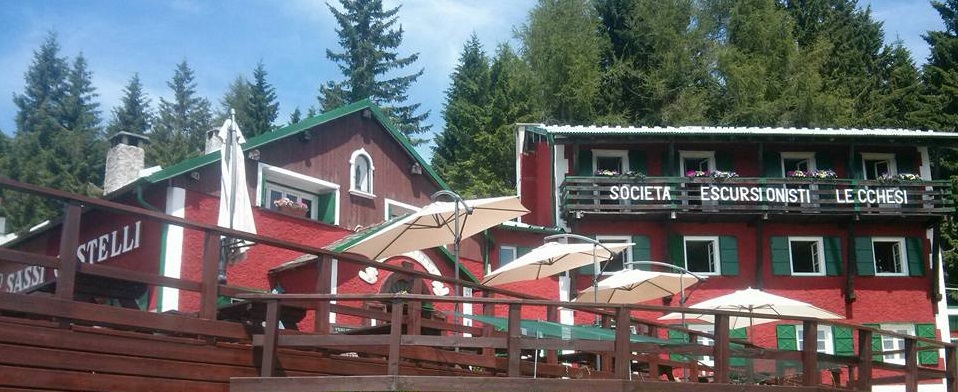
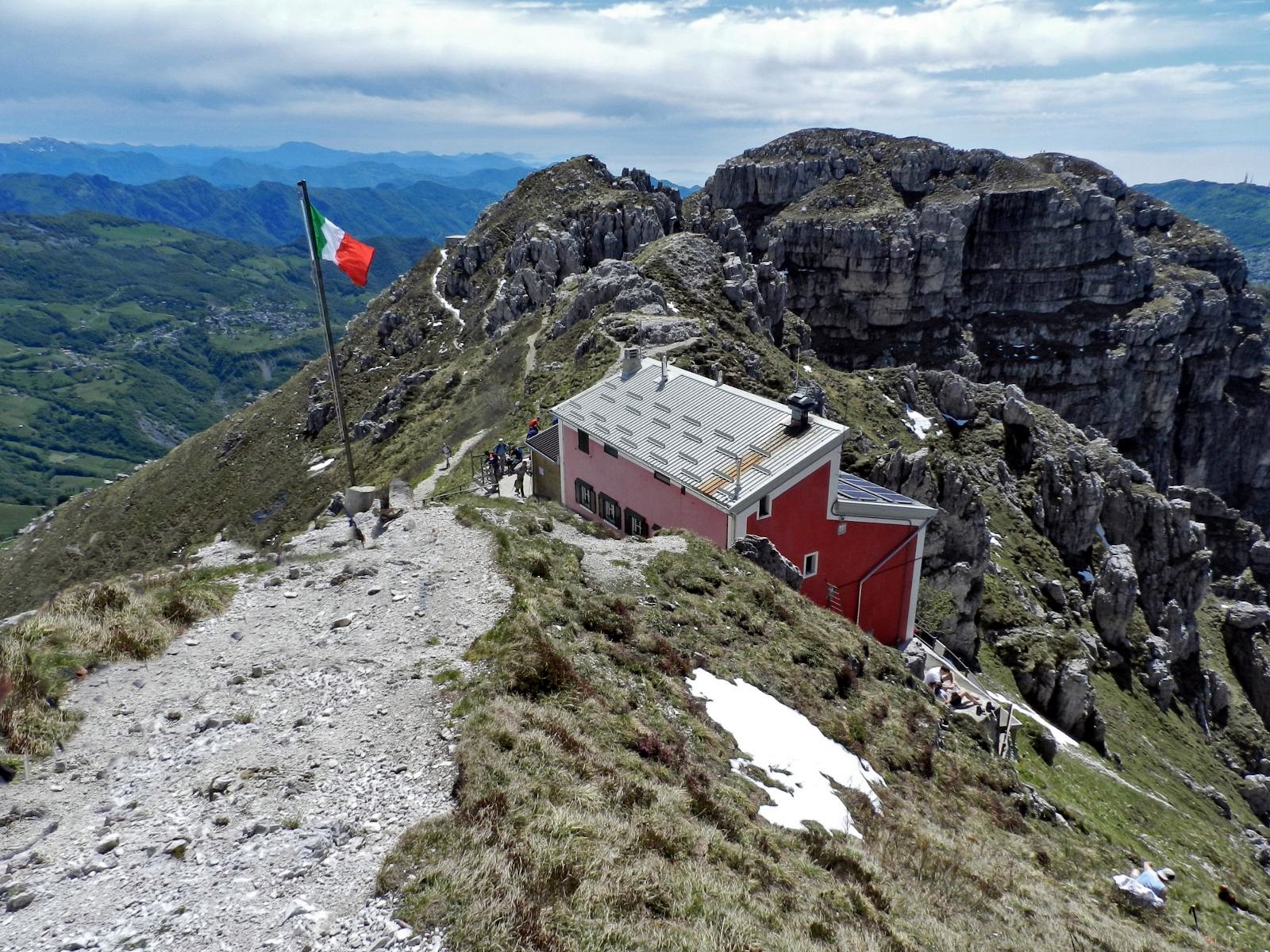
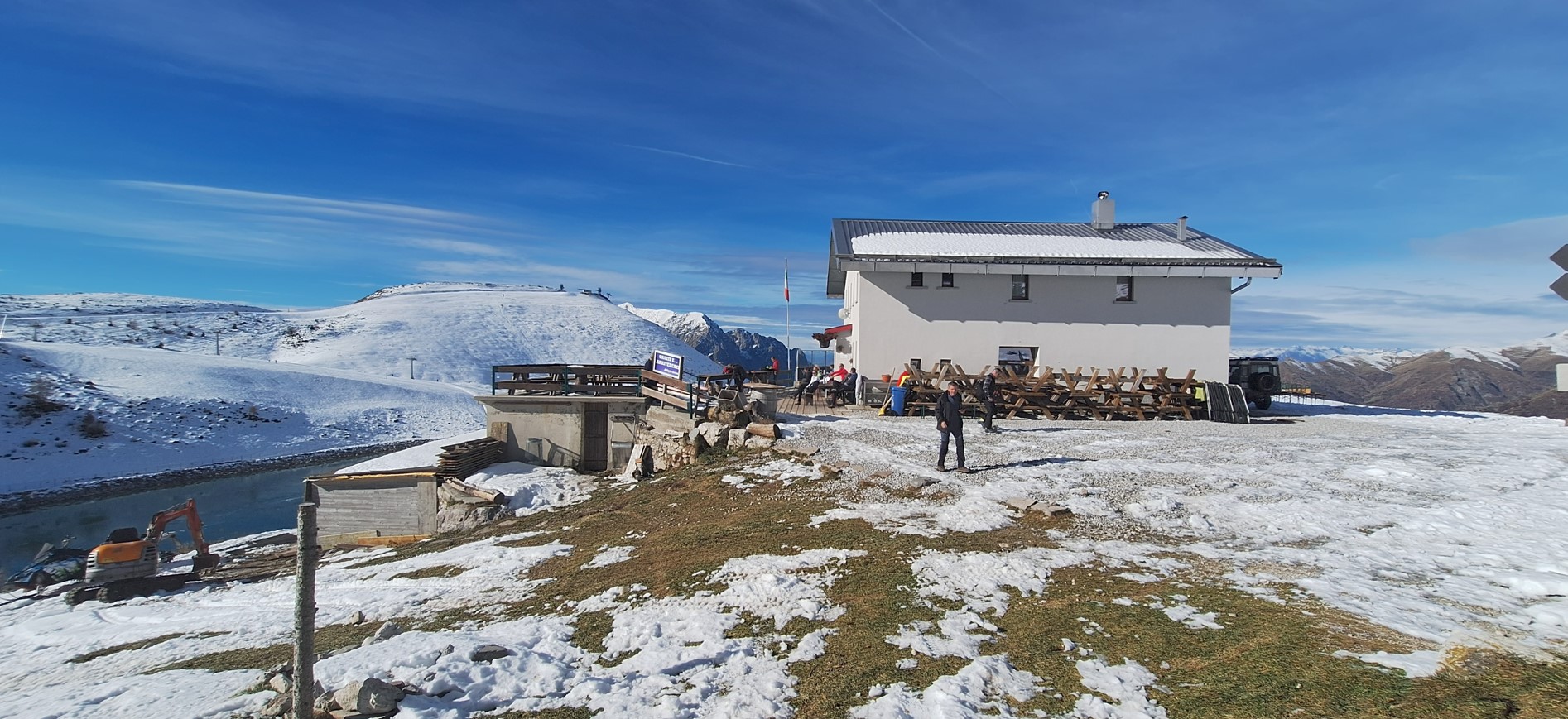
Nestled within the soft folds of Piani d’Artavaggio, where the air smells of forest and freedom, lies the Rifugio Sassi Castelli, perched near the upper cable car station from Moggio. However, those who prefer to earn their ascent step-by-step can choose a route that, in its “high” variant, offers thrilling experiences, sweeping panoramas, and a dash of adrenaline.
The starting point is the Culmine di San Pietro pass (1258 m), the link between Valsassina and Val Brembana, which can be reached by car following an itinerary already described in the first route. From here, the DOL (Dorsale Orobica Lariana) trail calls us to adventure. There are two options: the high and scenic summer route (2h30), or the lower and safer winter route (2h10). We choose the first, with our spirits ready to conquer Zucco di Maesimo.
The first steps lead us towards the small church of Saints Peter and Paul, a little stone jewel overlooking the pass. We prefer to lengthen our walk a bit to pass by it, enjoying a break among stone benches and a cool water fountain, where the slow rhythm of the mountain can already be felt. Shortly after, we rejoin the main path, which winds through tall grass and a forest that opens up like a curtain: to our right, the jagged profile of the Resegone keeps us company.
A small hitch – the path being interrupted – forces us to take a detour to the left, through meadows and ruins, until we reach a well-marked junction. From here we take the high path: the climb becomes more determined, the noises fade, and the first cows watch us placidly from behind a fence. The breadth of the panorama grows with every step, as does the satisfaction of being immersed in an authentic, still little-trodden environment.
We reach a viewpoint at an altitude of 1435 metres, where the vegetation thins out and the woods give way to the view. The path narrows and becomes exposed: it's important to have a sure footing and be careful here. Some sections are protected by rocky outcrops, but nature itself guides us, with its forms sculpted over time.
Along a ravine, then into a beech forest, we follow markers and a blue arrow painted on a tree trunk. We go down further, crossing an area where curious limestone monoliths sprout, like ancient sentinels. It's an unexpected landscape, alternating dense woods with sudden clearings and small huts immersed in silence.
The path, now narrower, winds between trees and rocks, offering an exposed but exciting stretch. A short detour leads us to a silent spring, protected by a wooden canopy: the water doesn't gush, but the charm of these little secrets hidden amongst the branches remains.
The climb picks up again with energy. The fatigue makes itself felt on the zigzag sections, but even here nature offers relief: some wild blackberries, a raspberry, and the green surrounding us like an embrace. After a flat stretch, we are finally at the summit of the Juice from Maesimo (1649 m, though a signpost takes the liberty of exaggerating, indicating 1680): in front of us open the Piani d’Artavaggio, vast and bright.
From here, the descent is gentle and silent. You cross the woods again, then emerge into the open up to the Maesimo rest area (1545 m), a picturesque spot with a table, benches and an educational panel on alpine fauna. The signage guides us: Artavaggio is only 40 minutes away, a final effort across pastures and grassy hummocks.
Ascending the slope, we reach the Mrs. Maesimo (1577 m), a mountain hut with an adjoining stable that evokes a simple and genuine lifestyle. A dirt track leads us downhill to a crossroads (1535 m), where we meet the path coming up from Vedeseta. From here, the walk continues gently along the agricultural-silvo-pastoral road already described in the first itinerary, eventually reaching the destination: the Rifugio Sassi Castelli.
Technical notes
Travel time: around 2 hours and 40 minutes
Positive height difference: 572 m
Negative difference in altitude 180 m
Towards the Rifugio Sassi Castelli from the Culmine di San Pietro (WINTER path): the most intimate side of Artavaggio
There's a less-trodden, more intimate and quiet side to Artavaggio: it's the one revealed to those who choose the lower path, also known as the “winter” path, which leads from the Culmine di San Pietro to the Rifugio Sassi Castelli. This route winds through secluded woods, forgotten clearings, and ancient huts, far from the busy trails of the warmer months. It’s a journey that doesn't seek the summit, but the soul of the mountain.
You start from the Culmine following the DOL markers and number 21, initially sharing the route with the upper path. Then, at the fork (altitude 1280), you leave the summer path to take the lower one, which turns decisively to the right, maintaining a level course.
After passing a solitary mountain hut, you descend steeply on a well-marked dirt track, passing a stable and crossing a small stream that, like a silver blade, cuts across the path. The descent continues, now on gravel, to the houses of Roncajola (1237 m), a tiny cluster of ancient dwellings nestled amongst the greenery. Here, a fountain invites a brief stop: the fresh, clear water tastes like a timeless pause.
Shortly after, the path plunges into a wood of hazel and beech trees. It's a contemplative walk, where the noises of the world fade away, giving way to the rustling of leaves and the soft gurgling of streams descending from the mountain. The altitude remains more or less constant, while the trail winds through short ups and downs, brushing past large rocks marked with signs pointing towards Artavaggio.
Beyond a stream, you emerge from the woods (1300m) and find yourselves in a wide clearing. Here the path becomes uncertain, almost as if it wants to disappear into the stillness of the tall grass. But the signposts guide you surely to the watering trough and then to the Baita Corna (1341m), which appears like a solitary sentinel at the edge of the pasture.
The track, at times faint, is rediscovered beneath a large beech tree, beyond which you pass under a fence wire. You re-enter a small wood and the climb becomes steeper. The ground, often muddy, forces you to look for handholds on the grassy sides until you finally return to dry ground. Here, some wooden steps make progress easier.
The path continues to climb, through meadows and young fir trees, until it reaches a small alpine pasture area with a fountain, a trough, and a rustic wooden table: a stop well worth a few minutes, if only to listen to the silence.
The climb continues gently until it meets the high path shortly below the rest area of Maesimo (1545m). Here the legs begin to feel the strain, but the destination is near. A few more minutes and we reach the Casera Maesimo (1577m), from which we descend on the opposite side of the ridge to the crossroads (1535m). From here, a comfortable dirt track takes us to the Rifugio Sassi Castelli, which finally appears as a promise fulfilled.
Travelling timearound 2 hours and 20 minutes
Height difference+526 m uphill, -135 m downhill
An itinerary that doesn't focus on spectacular sights, but on authenticity. Ideal for those seeking a deeper connection with the mountains, far from the hustle and bustle and closer to the ancient heart of Piani d’Artavaggio.