Towards Rifugio Sassi Castelli: two routes to discover the soul of Artavaggio
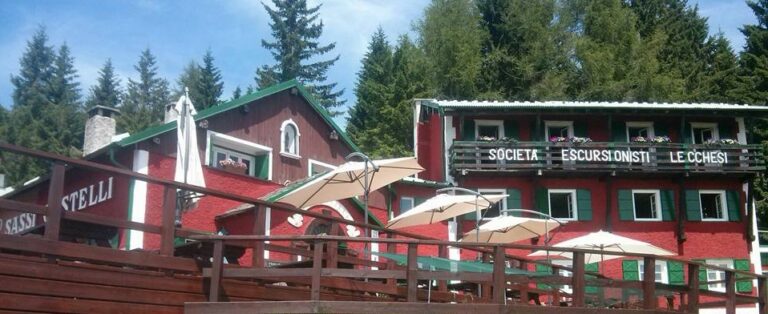
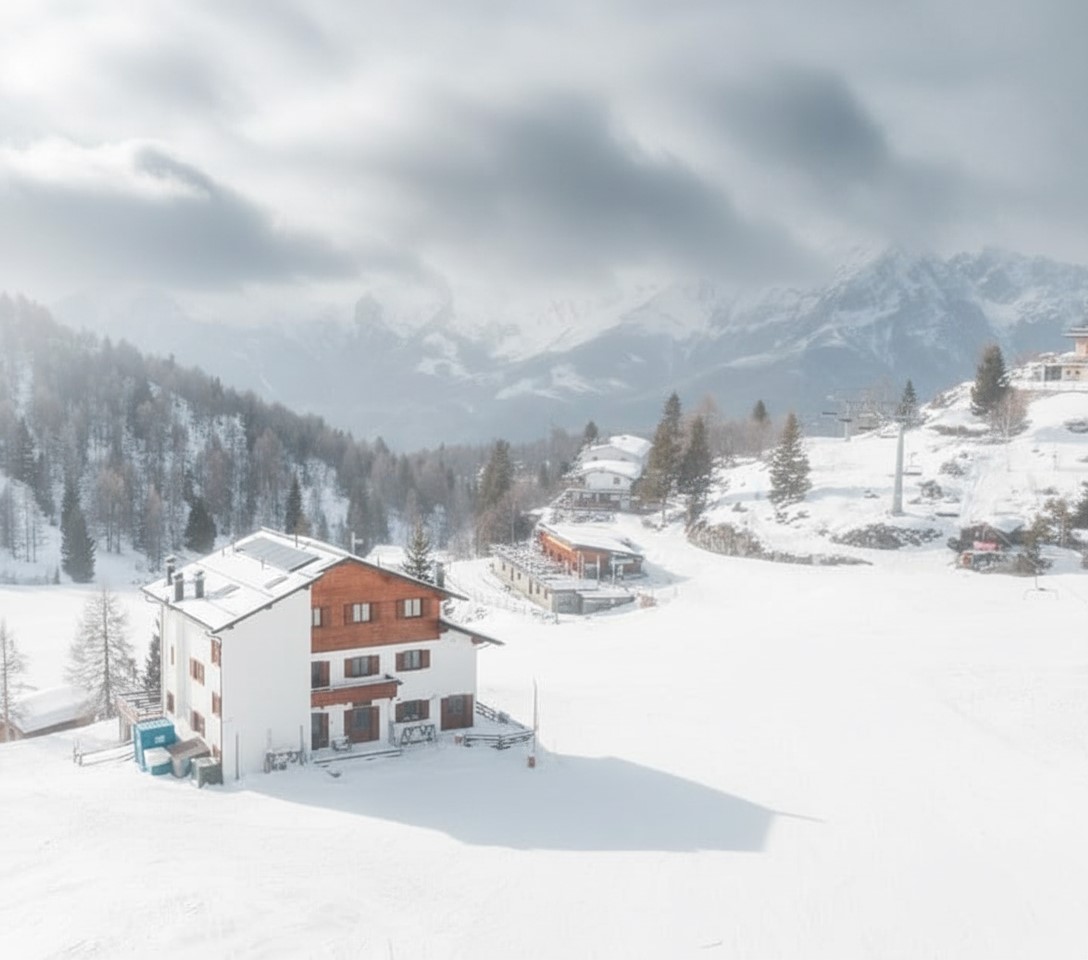
One refuge, two paths, a single emotion. Il Rifugio Sassi Castelli, situated on the natural balcony of Piani di Artavaggio, is the ideal destination for those seeking an accessible mountain that can still surprise. You can reach it comfortably by cable car from Moggio or, for those who love the silence of the woods and a good challenge, by path 24. Two methods, two different approaches to the mountains, both worth experiencing.
The short route: Moggio–Artavaggio cable car
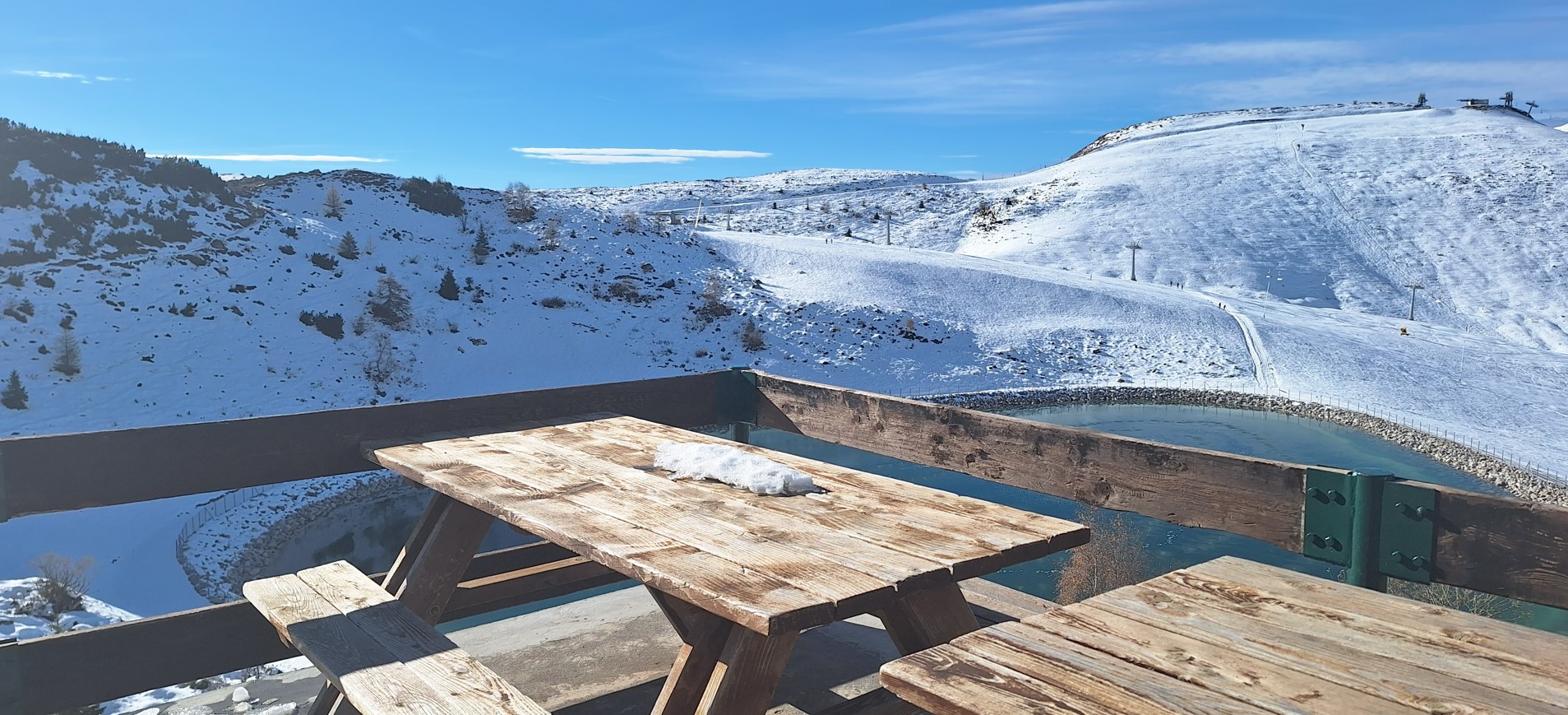
During the summer and winter seasons, the cable car departing from Moggio is an open door to the enchanted world of Artavaggio. In just a few minutes, you can go from the 891 metres of the village to the approximately 1650 metres of the upper station. An altitudinal jump that opens your eyes to a vast landscape, especially on clear winter days, when the peaks seem within arm's reach.
Upon arrival, just a few minutes' walk on level ground will lead you first to the Baita della Luna and then immediately to the Rifugio Sassi Castelli. It is a perfect option for families with children or for those who are short on time but don't want to miss out on the pleasure of a slice of cake at altitude.
The long way: path 24 from Moggio
But it is on foot that the mountain reveals its most authentic character. Leaving the car just above the Moggio roundabout, you take path 24: red, white and yellow waymarkers that accompany you almost to the destination. The first stretch is steep, immersed in woods dotted with blackberry bushes and old fences that tell stories of pastures and boundaries.
The route alternates between steep uphill sections and gentler stretches. You walk among chestnut trees lined up like soldiers, majestic beech trees and silent clearings where the only sound is the beating of your own heart. There are also stream crossings to navigate – small streams that, in good weather, do not offer much resistance but bring freshness and life to the walk.
One of the most poignant stops is at the old Rifugio I Bocia, abandoned but still full of memories. Here, on a large stone, a poem by Thomas Merton invites reflection and introspection. It is a moment when one's pace slows, the breath becomes shorter but also more conscious: the mountain is not just effort, it is also healing silence.
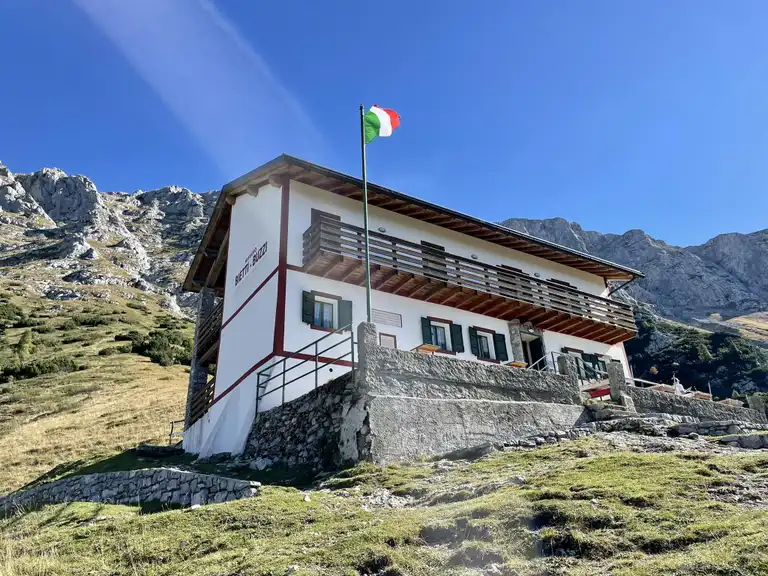
Continuing, the path becomes increasingly scenic. You catch glimpses of the cable car pylons and, in the distance, the buildings of Piani di Artavaggio. The last hairpin bends through small woods and meadows, then you come across a small pink chapel which announces your arrival. Rifugio Sassi Castelli is there, nestled among the meadows, almost as if it wants to remain discreet and not disturb the beauty that surrounds it.
Two hours and a quarter, 750 metres of elevation gain
The journey time is approximately 2 hours and 15 minutes, with an elevation gain of 750 metres. A hike suitable for those with a minimum level of fitness who want to immerse themselves in a landscape that changes step by step, revealing views that are sometimes wooded, sometimes open, and sometimes wild.
At the top, a hot chocolate and a view that freely sweeps towards the Grigne and Zuccone Campelli are the right reward for the effort. Here, more than elsewhere, you understand that the path is not just a means to reach a destination: it is the real experience, the true journey.
There is another path from Moggio, past the cable car: a climb through woods, silence, and memories
In a mountain corner that reveals itself unhurriedly, between the folds of Val Taleggio and the slopes of Artavaggio, the path to the Rifugio Sassi Castelli begins almost quietly, hidden amongst hairpin bends and memories. We set off from Moggio, just past the cable car's lower station: a barely perceptible curve, an unassuming car park on the left (altitude 860m) and a sign promising two hours of walking to the refuge.
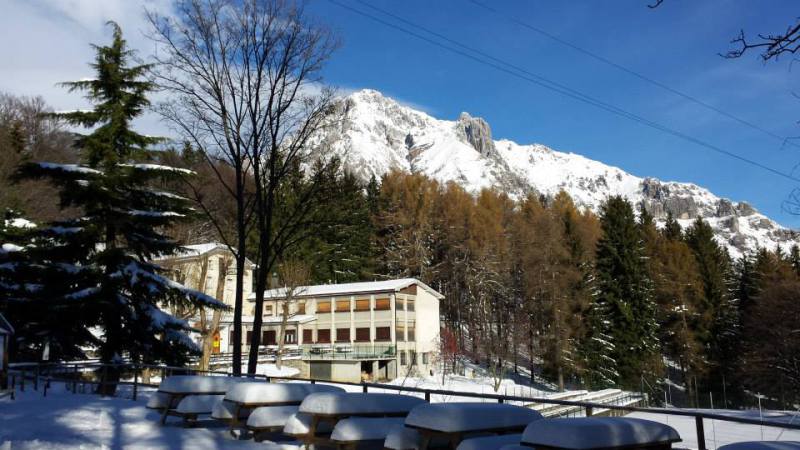
The path immediately heads into the woods, preceded by a somewhat melancholic picnic area, with time-worn tables. A dirt track guides us through trees and silence, accompanied at times by the gurgle of the stream running to the right. On the left, a Pro Loco noticeboard seems to observe passers-by like an old guardian of the place.
A little further on, you briefly emerge outdoors, beneath the implacable geometry of the high-voltage cables. Here too, a few benches, a tired drinking fountain, and up there, to the right, the cable car cables ascend lightly, almost reminding us that some people prefer shortcuts.
No, not us. We're staying true to the path. We ignore a little track to the right – a mountain bike trail – and continue on a narrow mule track that winds through bushes and roots, before climbing steeply to the left on a tough ascent. The woods close in, the incline makes itself felt, but it's short-lived: we soon emerge onto a comfortable dirt track that levels out, allowing us to breathe again.
Between timidly flowing streams and fountains that seem only half alive, the path alternates between concrete and shortcuts through meadows, leading to a small bridge with green railings. From here onwards, the path begins to gain altitude more seriously. Signs point towards Artavaggio, and our destination is ever closer, even if the path, at times, seems intent on testing us.
Between one clearing and the next, the woods welcome us back. The water in the stream is now little more than a whisper. The ascent becomes steep again, bordered by cable car cables and marked by small relics of the path: a bench made of railway sleepers, a boulder with the inscription “Bocia”, and shortly after, another blue marking indicating the Cazzaniga Hut. These are signs that speak of ancient passages, of hikers past and present who have left a gentle imprint, as if to say: “we too have passed this way”.
The exertion is measured in bursts, alternated by flat stretches that offer respite. Then the climb begins again, amidst large boulders and makeshift benches. At an altitude of 1110 m, a barely visible inscription on a stone – “Ca Rov.” – invites us to deviate onto a faint path: but we press on straight, ever higher, until we meet path no. 24, which takes us by the hand for the final metres.
The arrival at Rifugio Sassi Castelli, at an altitude of 1335 metres, is understated and well-earned. The total elevation gain is approximately 775 metres, and the time taken for this ascent varies, but hovers around two hours and fifteen minutes. It’s an accessible excursion, but never trivial: a small journey into authentic mountain scenery, the kind made of silences, genuine climbs, and the traces left by those who, like us, love to earn the view step by step.